There was a time when every run started and ended with a zero. If my 12K run was in progress, I would not be content with a 11.95K, so for the last few minutes, I'd pay less attention to the road, waiting for my wrist to signal when I should stop. If I had to shuffle back and forth, or take a turn around the corner to make up the extra few hundred metres, I'd do it. I didn't want to round up.
This post is about getting older and how you tackle that, take stock of it. It's about peering back and facing forward. It's about evolving your view of all that and, surprise, it has something to do about running. What sparks it is that I'm turning 40 this week. It's not easy to make the public declaration from someone who hides his birthday on Facebook, who would rather spend a birthday not at work and alone with my thoughts, who cringes at attention. But everyone knows. They're expecting me to make a big deal so I am -- here.
Milestones can be weights -- weights we pile on ourselves, of things we want to achieve, things left undone or things you regret. They are, in the end, just things.
I've been never one for birthdays. As an August kid, birthdays melded into that final summer month just as pre-school anxiety starts to spike. I remember August more for working at the burger stand that my family operated at the CNE for 15 years, where as a child I stood by the monster toaster, shifting from foot to foot on a grease-smeared floor tile for hours, mastering the few deft moves it took to open a bag, dumping the bread into a pile, splitting a bun open and watching them get charred. I was nicknamed "bun boy," only realizing now how silly that sounds. In subsequent Augusts, when I moved into more 'acceptable' working age, I graduated to grill master or fry cook, then manned the till while building my customer service skills at age 11, entrusted with the family's daily earnings. I was rewarded with rolls of quarters I'd empty into the midway's video game booths. I swear I spent many a birthday working 12-hour shifts in my orange and brown Chef Burger T-shirt.
Birthdays in my household were treated much like Christmas -- my immigrant parents tried to interpret these Hallmark holidays or 'Canadian traditions' and went through the motions without really grasping why these milestones were meaningful as if they were learning about assembling food and decorations from an Ikea instruction manual -- they got the gist but never built it right, and there were always leftover parts: A plastic tree with ornaments, sure, lets try this; wrapping birthday gifts, they do that? What does a kid want for a birthday? I usually ended up with a few "new" pair of socks every year, one at Christmas, the other at my birthday, tossed in my general direction as if to say, "congrats, another year since you've been alive. Happy Birthday." In later teen years, I started to buy myself a gift, but by then I had already realized that it really didn't matter much.
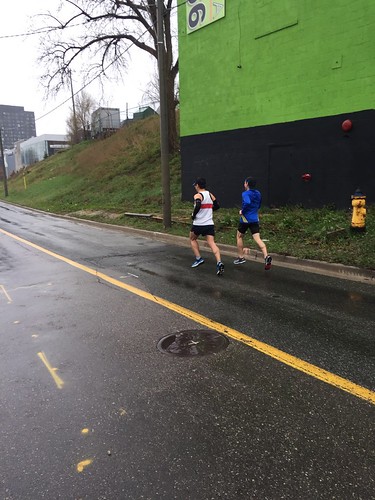
I had to rip those arm warmers off. A kilometre earlier, they were shielding my limbs that are apt to get cold in the gusting wind, but now I was running into the sunshine, a honest tailwind behind me, they were getting on my nerves, big time. You don't want any negative thoughts this late in a race.
A few clumsy motions later, they were off, but not without a casualty.
I had dropped the wristband.
How could I leave it behind, after it carried me for so far?
So I stopped dead in my tracks, 36K behind me, less than an hour away from The Goal. I turned, risking sudden cramps. I wasn't going to lose it, it meant too much to me.
***
Most marathon experts advise even paced marathons -- run the first half pretty much the same time as the second. By doing so, you do not risk getting up to your lactate threshold levels until late (or never). The race will get harder as the miles pile on -- they always do, but if you try to bank too much, you are likely to blow up. I know this feeling, having had marathons where marathon pace was going great, and a kilometre later, you were going 30 seconds slower per kilometre. Then you took a few walk breaks. Then it was over.
My last two marathons, I ran two negative splits, where you actually run the second half faster. In Chicago, where I hit a 3:18, I ran the second half 9 seconds faster than the first. In New York, which I ran three weeks later, I ran the last 21.1K about 30 seconds off the first.
But this weekend called for anything but a negative split. The first half features a net huge downhill that even I'd advise runners bank a minute or more.
And then there was that wind.
***
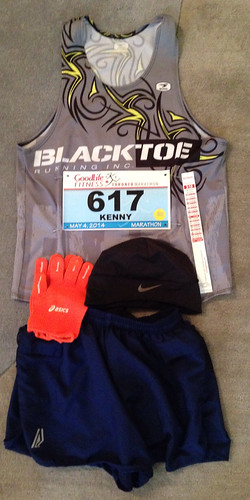
The Toronto Marathon is where I PBed and qualified for Boston back in 2009. It's a net downhill course in the first half but it doesn't always necessarily make it fast. But it is a fast course and if you run it right, it can pay huge dividends. I put Toronto on my race calendar when I signed up with BlackToe Running in December. I told the coach that I wanted to get back to Boston. When he asked what time that was, I told him 3:10. In reality, I needed a 3:15, but Boston had a cutoff last year of around 1:28, which meant you needed a 3:13:30 to get in.
Buffer, I told him. I wanted a buffer and 3:10 would get me that.
I've written about the crazy training in this extreme winter. I had, up to marathon day, also been on a 157-day running streak, had hit 200 miles or more per month for four months, and had set new personal bests in the 8K, half marathon and 30K. In my mind, being three for three in races was a massive deal, but there was really only one race that mattered -- the marathon distance.
Through the winter, my group got faster, that by the time were were talking marathon pace, the coach was starting to assign us 4:25 kilometres, or 3:07, or three minutes faster than that 3:10.
One thousand blog posts. Jesus that's a lot of writing. Forget Twitter and its 140 characters, or thousands of tweets, this is a real milestone. I was kind of thinking of novel ways to mark this but there is no better way than to look back.
It has been quite the ride. Blogging has become part of my routine, just as it is to slip on my running gear and putting on my Garmin. I used to sit down to type in my thoughts after a long run. The ideas turned into posts and it was gratifying. I used to think up blog posts in the middle of runs, a nice way to distract from the pain at times. As I hit 1000, the pace of posting is slowing, but the commitment to this form of record keeping endures. I can just rely on the Garmin and runsaturday and SportTracks or even a diary with columns and rows, but what fun would that be. There are always stories behind the runs and races and athletic life, and I am lucky to have found this venue, an open place to express the reasons why I run.
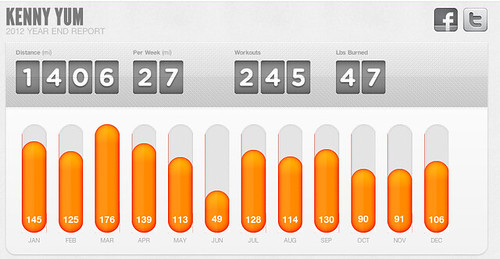
In numbers Number of days this blog has been in operation: 1535 Number of words I've written, give or take a few thousand: 243,803 Number of times I recapped a race: 50+ Number of jobs I have worked in the time I have had this blog: 4 Number of marathons I've written a race report for: 8 Number of Garmins I have gone through: 3 Number of pairs of shoes I have worn down in those years: 22 Number of miles while this blog has been operating: 7986 Number of kilometres: 12852.2 How many times I would have crossed the country (Canada, that is): 2 The most written word: miles
Words: This is the tag cloud generated (by Wordle)
Most mentioned words that sum my running life: run, pace, Sunday, faster, morning, Marathon, training, Toronto, hard, pretty, felt, fast, hours.
In pictures:
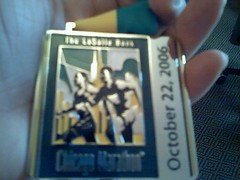
Landmark moment (first marathon): From "I am a marathoner" on October, 22, 2006
On running with company: "Company on the trail" We then talk about the trail. Our favourite runs. The races we've done. We're both year-round outside runners and, on this hot day, we talk about running on this same trail, about how in the late fall it empties of spring and summer runners, about treading on snow and about winter cleats.
On melting down during a race: "Stumbling to the 5K finish line..." All of this is to say that we're asked to train smart, but maybe I should learn to race smart and listen to the body. When it says slow, I shouldn't do the pig headed thing
On pursuing a dream, and then achieving it: Dreaming: "Race report: Scotiabank Waterfront" on September 28, 2008 A volunteer who was guiding me toward the wheelchair asked me if this was my first marathon. I just held out my hands, put up my four fingers and smiled. 'Four,' I said. 'This is my fourth.' I'm sure she'd think I was crazy if I told her I'm running my fifth in 28 days.
Scheming: "Elephant in the room Funny, walking home from the race, I tried to come to grips with a wide range of emotions, but I can only describe myself feeling resigned. What an odd feeling
Achieving: "Reflecting on the BQ" on October 23, 2009 I've been on cloud nine over the past week. I don't think about it too much during the day, but every time I've gone out on a run since last Sunday when I qualified for Boston, there have been moments when I'm just beaming, smiling, and wanting to pump my fists
On running for my mom: "Why I'm running today" on May 4, 2008. Oh I wish she could see me, I think she'd be so proud. And so I run this race for my family, just for the four of us, and in the final miles, I hope to bring mom with me. (PS: I set a PR that day)
On why I run (one of many): "Winners and losers" from June 16, 2006 But of gains and losses, of pluses and minues, I see my Nalgene bottle half full. With every stride I force myself to run hard, I feel stronger somehow, and not only in my legs. I may regret forfeiting a longer slumber during my morning workouts, but relish in it when I walk into work, feeling fully refreshed and alive. Alive, good thing I mentioned that.
On Twitter and the running community: Why runners should tweet on April 9, 2009. Us running bloggers are a real community. Although we are often separated by time or distance, there are some common themes: We love to run. We run for fitness. We train for races. We obsess over marathons and all distances that require a bib and pins. We write race reports. We log our daily miles. There's one thing I've always loved about reading other running blogs. We encourage each other, offer up advice so that although we may not run with groups, we have a group to talk back to.
On rediscovering my origins of running: "Homecoming" It's about 20 years ago, and yumke, at aged 10, is in phys-ed class running portion, which consisted of running around the track, then around the neighbourhood. The streets are wide, with tall trees providing ample shade. On the left and right are long patches of grass, with wide houses. The path weaves, and the little runners, in Grade 5, struggle to keep up with the distance. It feels like forever for us. We take walk breaks, only speeding up once in awhile when we catch our breaths.
On the mystique of the marathon "The Biggest Loser and the mystique of the marathon" from May 6, 2009 I saw a headline the other day in the newspaper describing a 12 inning 'marathon' game. I see on TV how there's a Seinfeld marathon. I read about a marathon bargaining session by the union.
On seeking redemption"Braving it" on Nov 3, 2009 We reach the start line ready to race, ready to "express our fitness." Marathoning for us mere mortals is not about showing off your natural running talent on race day. We freaking work for it.
Hardware: "Meaning of medals on July 20, 2008 I hang them there to remind me of what I'm working for. I hang them there on my fridge to remind me to eat well (funny, huh). They inspire me, they give me goals, they humble me and they just want me to add more hardware to that collection.
On being a bad-ass: Don't mess with runners on May 13, 2009 The kid is on my heels and we blast out for another 30 metres, and I can literally feel the wind against my body, when he says something like 'I give up' and drops off.
Bad ass part 2: Weird encounters on a long run on Jan. 31, 2009 Stickboy is running right on my heels. He's got some speed but there's one thing I like to think. You take a marathoner in the latter part of a training run, and even on a bad day, he'll take down any drunken freak who thinks they can 'run fast'.
My favourite race report: "Race report: Goodlife Fitness Toronto Marathon on October 18, 2009 Yesterday, I pulled on my running gear and ran a scant 2 kilometres. The air was crisp, the sky clear, the wind slight. Later, I traded email with my friend Lee who said he had a good feeling about today. Weather was perfect, he said. I agreed.
Seeking something big: Epic on July 30, 2009 I went to the nearby plaza where I used to buy fries with gravy AND ketchup after school, and gobbled a few slices of pizza, a bottle of water and a bottle of orange juice, with barely enough change to take the train back home.
Not a post, but a book: And one thing I was proud to produce in 2008, and about ready to do a second one after Boston: A blog that became my own book
I post-dated this entry for 9:30 a.m. Sunday, a time I hope to be in my final miles of this Flying Pig Marathon. The last month has been difficult to find any focus, in any aspect of my life. My mom is not doing so well, and for that, I found myself tremendously sad and even more helpless.
Many years ago, when I was still in elementary school, my mom had a first of several strokes at a young age, not much older than I am now. She's a fighter, so she recovered and returned to work and life, but emerged somewhat changed. Eleven years ago, she had another complication that resulted in a coma and long recovery. She fought back. Last summer, she had another battle, but she battled back within a season. Six weeks ago, she suffered another head injury, and now we're just hoping for the best -- every day is touch and go. We're also bracing for any possible outcome, but we're not willing to accept defeat.
So many parts of me was telling myself to quit this marathon, but other parts of me were telling me to do it for exactly the reasons why I shouldn't. I find myself here in Cincinnati today and I found the reasons why. I run here today because I share the hope my Dad has for her recovery and I should therefore try to continue to live my life. A vigil is just that, a wait till the end. Not me. I run here today because, well, simply because I'm running this for her. I run here because for me, running and marathoning are a celebration of life.
My brother is a follower of my blog and follows my running (probably this morning too) with keen interest. Every time he sees me, he asks me about my latest run, or my upcoming race. My father and mother know I run with a passion, and that's just good enough for them. A marathon, my dad asked the other day, you're going to do another one of those? I wanted to tell him about how hard it is to train, the early mornings, the hard runs, the amount of strength and dedication and devotion and time and effort and the miles -- oh the miles. I wanted to tell him that it's 42.2K and have him explain how far that would be, him the engineer, the mathematician. I think it'd dawn on him if I told him how LONG it was.
My brother and I are the centre of my mom's life. We know that. She lives for us. She's been through so many strokes and comas and each time we welcomed her back home, we knew we lost a little bit of her soul. But the person I choose to see is the mom on my second birthday you see in this picture. Carefree, loving, youthful and so happy to be alive.
I don't know how the emotions will bubble over as this post goes up at 9:30, but my sadness has hit me recently, at home and during my runs. On one run recently, I found myself in tears thinking of her, yet I was at a point at my most alive, heart beating, arms pumping, legs moving. Oh I wish she could see me, I think she'd be so proud. And so I run this race for my family, just for the four of us, and in the final miles, I hope to bring mom with me.
Running streaks have to start somewhere and it was a year ago tomorrow, U.S. Thanksgiving Day, I went on a run.
This morning, I ran for the 365th straight day.
This is a post that in theory I've been thinking about writing for hundreds of days. If I had my way, I would write the entire piece while on the run, as opposed to on the couch long after I've put away my running shoes. In front of my laptop, I can't ever match the emotions, sensations, thoughts that I'm having each day while I am out on a run.
I ran today.
Today, I felt speed, as I accelerated while weary of the lights threatening to turn red. Even typing the word "speed" doesn't begin the describe it. How does one feel speed? My head says go fast and my legs respond, firing off those commands to move arm, muscle, bone, leg, feet -- while my lungs suck in extra air that will be parcelled out to areas that need it most. In the span of a few seconds, speed is not just movement that is done rapidly, but speed is expressed as motion executed by a series of strides, only to be spurred on by a series of decisions -- one decision overrode them all. The decision to run. And today I decided to run.
"I have to practice running more," a co-worker said to me the other day as I came back from a noon speedwork session.
"Training," I answered her. "You don't practice running, you train."
That word training, it's meaningful to me, even more so than "racing." With "training," I can somehow make a daily excuse to run. Training is how I can feasibly explain to a non-runner why I run 100 kilometres a week. Training is how I've managed to make a run streak that's now almost at 300 days feel almost normal. It's necessary, I say about my running without saying why it's necessary. I'm training.
Races are the shiny, glittery objects of our sport -- we all from time to time, with good reason, succumb to it. We fawn over them, covet them, collect their swag and obsess over them. Over my bed hangs a few select medals I've collected over the years. The other medals -- taken after I've toed the line at marathons, countless 30Ks, halfs and 10Ks, are still stuffed haphazardly in a cardboard box with the Sharpie-scrawled "medals" that the movers hauled into my spare bedroom. It hasn't moved since I placed it on a shelf a year ago. While I keep my medals, I'm not a fan of the bling. I've never quite understood why these massive medals need to be created. I see people asking about medals before they will commit to running a race and I really don't get it, as if it's the swag that's the make-or-break reason why you haul ass for 26.2 miles. Truth is, the more medals I'll earn, the bigger a cardboard box I'll need.
Training though, I can't get enough of it. I love to train. Above all, training, and the process that it forces me into, turns running from chore to routine to just a thing that I do -- no need.
Jeff Adams is a Canadian Paralympian who gave a corporate motivational speech to my company offsite this past summer. Through his speech, he talked about "searching for excellence" in sports and how that relates to the business world. What I connected with the most was when he talked about goal races -- performing on the world's stage, when all cameras and eyes were on him -- he also related to us that he enjoyed the most about the process was the training.
Everyday I train, he told us, six years after he retired from a 20-year career. When you train, you're alone, nothing to drive you but yourself. When you train, you focus on all the parts that need to improve so you can perform at the top of your abilities. But however that goal day unfolds -- race day, Olympics medal day, your first marathon -- it's every day before and every day after that defines you.
While the often-euphoric feeling associated with race day magic is hard to be beat, it's the every other day that nurtures the runner in me. I thought it was a rare thought at first, but the more runners I'm meeting, I'm hearing similar themes.
Training gets me up at 5:30 a.m. to fit in a run before work. Training gets me to put on my running gear right after the work day is complete. It gets me to flush out the schedule, urges me out the door on an early Sunday morning, and training makes -20C runs seem not only doable, but logical. Running offseason is wonderful, but it lacks the structure that the type-A self needs. I liken it to doing a strength workout without a good idea of what your sets or routine look like.
Committing to training is even more important than following a schedule. Training I associate with the words "commitment," "dedication" and "passion" even as I think of the words "escape," "pain," "hard work" and "disconnecting." Training pushes me beyond my comfort level. It has made me a better runner but at the same time turned me into a runner who loves running as much for the hard work as it is to simply run. In training partners, I'm finding people who feel the same. I no longer feel like the lone guy who just loves to run -- there are many more of us.
I was posting on Twitter the other day about how I'm going to be ramping up to 70 miles a week to which runnrgrl asked why I was running so much. I thought it's probably a good idea to talk about what has become my marathoning bible.
Simply put, there's a heck of a lot of science and research behind what it takes to run a good marathon. Sure, there's experience and tapering, but there's also the reasoning why if you take a well thought out approach to training, you can build up to the race day with many things in mind.
When I was training for my first marathon in 2006, I stuck to the famous Hal Higdon program. I religiously stuck to the program and did all the mileage. After race day, when I hit the wall big time, I knew I had to step it up if I wanted to go beyond finishing a marathon to targetting more aggressive times.
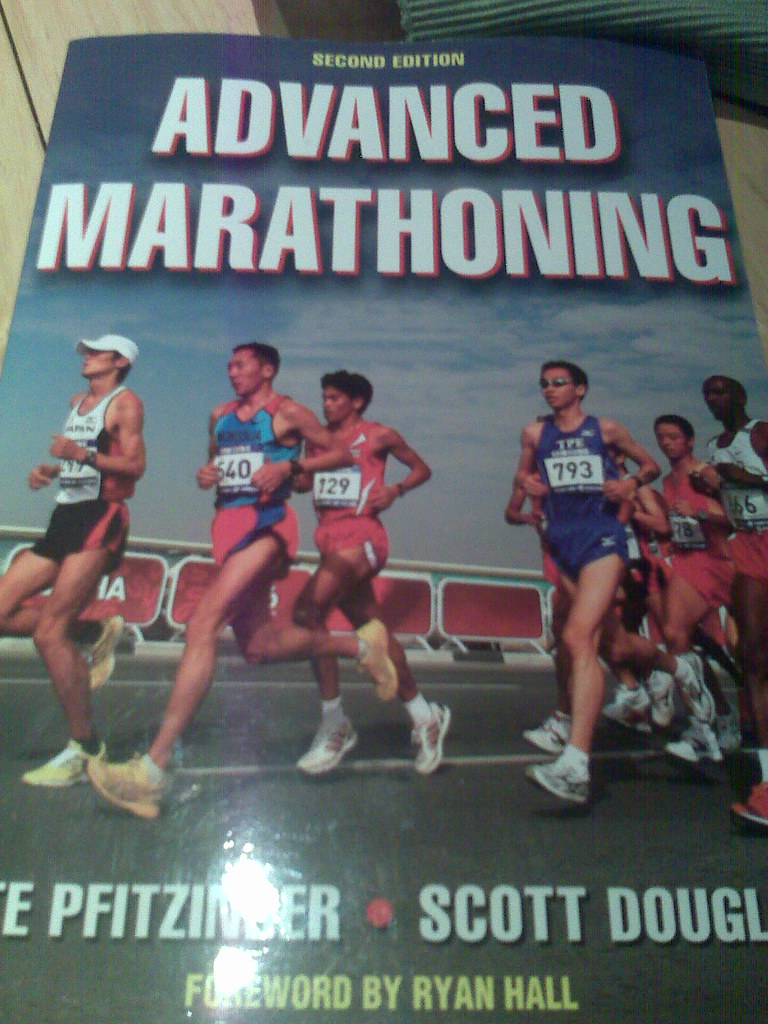
In 2006, a lot of other running bloggers were talking about this 'Pftiz' or Pfitzinger training program. It seemed so daunting, from relatively high mileage to all this talk about a specific set of training routines. So the day after my marathon, I walked into a bookstore in Chicago, and sought it out, and that's when I bought the first edition of Pete Pfitzinger and Scott Douglas's Advanced Marathoning (See parts of it in Google). The title itself suggests it's more than just a marathoning book, which you'll find in droves in book stores. I think his preface says it all:
"What do we mean by advanced marathoning? Simply this: that many runners aren't content with saying, "I finished," They want to run the marathon as they do short races -- as fast as possible. That doesn't mean they're going to drop everything in their lives and do nothing but train, but it does mean they're committed to doing their best...
They go on..
"Competing in the marathon, as opposed to completing the distance without regard for time, requiresthorough, intelligent preparation.... Advanced marathoning has to be based on more than common sense and running folklore. Advanced Marathoning, therefore, is based on sports science."
From using the program mostly for the last five marathons, I can boil it down to this in 10 things I've learned about advanced marathoning:
1. There is reason behind the excellence in marathon running: The funny thing about the book is it the actual training schedules fall at around page 137, which means you get 136 pages of science about why you should train differently about training for marathons. It teaches you about each type of training run and how it boosts a component of your racing. It talks about nutrition and hydration, about race preparation. My favourite section is the elements of training, from page 3 to 31, which are the most enlightening passage that explains how you can train yourself to be a better faster long distance runner. You'll finally understand what mitrochondria, glycogen, LT and V02, along with slow-twitch, fast-twitch mean to your marathon training.
2. Long distance matters, how you run them matters as well: I learned from this book that a 20 miler was importantly not only because it was long distance, but how you use it to train your body to use the energy stored and what pace you should intelligently use during these runs.
3. Tempos are important: I always thought that tempo runs and lactate thresholds has nothing in common, but I learned that they are the same, and that both types of runs are key in helping you maintain a strong pace. You build your LT, you build your ability to run faster for longer periods. Who knew that these training runs at half marathon pace (between 4 to 7 miles) were some of the more painful training tools, but some of the most effective.
4. Recovery is a key training method: I'm still learning this, but rest is when your body repairs itself to become stronger. Pfitzinger-Douglas plant plenty of recovery runs that MUST be run at the right slow pace.
5. Pace runs are key: Sure, it's fine to target a 4:30K marathon pace but until you're forced to do a 13 miler at pace do you realize that it's much tougher to do by yourself. These runs are key simulators for race day.
6. Races, in context of training, are vital: When I run races during my training, they have a real purpose. Some coincide with a scheduled LT run, so I run them at the appropriate pace (ie, a 10 miler slower than I'd usually race it), or a pace run (ie a 30K run in the middle of summer, all of it at marathon pace). Closer to race day, we're encouraged to go all-out, they give you previews of where your fitness was. During my heavy training I've set so many PRs at different distances, from 5K to 30K.
7. Striders, striders, striders: I used to see a 5 miler in my program and just run 5 miles. When I learned to throw in striders, it improved my running form and that technique became key in emptying your tank when you're tired at the end of a race. Pfitzinger-Douglas sprinkle them in all the time.
8. Trackwork should actually be work, not show-off sessions: The last 6 weeks or so of the program gives you lots of V02 work and you're encouraged to run them at a specific pace. Lots of people go out to the track to run as fast as you can but Advanced Marathoning (and other books I've read) tells you to find exactly the pace because that's what will build your oxygen intake... and ultimately let you run faster.
9. Mileage is key to endurance: For my first marathon, it was only the weekend runs that would be high mileage. When I did the 70 mile a week program last year, my peak week looked like this:
Monday: Rest Tuesday: 10 miles (6 a.m., 4 p.m.) Wednesday: 15 miles Thursday: 6 miles recovery Friday: 12 miles w 7 miles at LT pace Saturday: 5 miles recovery Sunday: 22 miles
Wow, I can't believe I pulled those weeks off. Other than the 22 miler, I had three runs of 10 miles or more. These 'medium long runs' are meant to to "reinforce the physiological benefits of your long runs". Simply put, running these long mileage make you a stronger long distance runner, no question.
10. An 18 week training program, well, is really 15 weeks: Cause you taper in the last three, thank god.
Last year, the 70 mile program brought me on the cusp of a 3:10 marathon. I didn't achieve that, but I did achieve faster 5K, 10 miler, 10K, 30K times. That block of training, I believe, made me a stronger runner. Lets put it this way, I ran 300 miles in one month last August. It's a lot of time on the ground, let me tell you...
I know there are plenty of faults... It's too much running, this 70 miler, not enough LT or pace work. I know the new book has some tweaks, like more quality work (LT, for example) and I'm going to give it a go.
This training cycle, I'm going to lean on the 70 mile program. I may be a bit more smart and use the Thursday recovery day to do other types of workouts, like maybe an extended stretching session or weights or just rest.
Bonus item I've learned. It's very possible to calculator your potential marathon time based on the V02 calculators. McMillan race calculator has been deadly accurate for me. So if you've already run a marathon, type in your fastest half marathon or 10K run and there you have the possibilities, possibilities left to be tapped by 18 weeks of training...
This is not one of my long-run epiphanies, you know, those thoughts that occur to you when you're in the middle of a 20 miler. I think I can confidently, after blogging about running for more than three years, make this proposal to the running blog family (the RBF, as we know and love it to be.)
Us running bloggers are a real community. Although we are often separated by time or distance, there are some common themes: We love to run. We run for fitness. We train for races. We obsess over marathons and all distances that require a bib and pins. We write race reports. We log our daily miles. There's one thing I've always loved about reading other running blogs. We encourage each other, offer up advice so that although we may not run with groups, we have a group to talk back to.
I'll have to admit that in my first few years of run blogging, in 2006 and 2007, I found a pretty good community and have visited a tonne of run blogs. Over the years, my Bloglines RSS reader account has come to grow to more than four dozen running blogs. I try to make effort to read the runners I've followed In the past year or so, I'm finding my time is stretched as I take on other work and blogging and running commitments. And while I get no shortage of visitors, the number of bloggers I interact with has fallen. Am I writing anything different? (No, not really.) Has run blogging changed? (No, not really.)
The odd thing I find is more recent run bloggers have created their own communities and spend a lot of time on each other's blogs leaving comments. But why weren't anyone finding long-time run bloggers, I thought. Communities are often closed by the people you associate with, you only discover friends of friends. I know that Blogger's new 'follow' tool is a great way to foster community but why can't we bring everyone under one roof.
RSS readers are slowly gaining acceptance as a means to read syndicated content, but leaving comments on 35 blogs means that you have to visit 35 web pages, with 35 commenting systems. It's odd and kinda hard to navigate. And, of course, what happens when you're on the go.
Twitter, of course, is the hot topic among media (I work in media, so I know the talk), we're so fascinated by it but most of us have no clue why we should be using Twitter. People love to hate it, or love to embrace it. I'm in between, as in I see it as a great tool but I'll let history decide whether it's the best thing ever.
One thing is undeniable is that it's highly searchable, live and interactive, mobile and in the moment. It's an amazing crowdsourcing tool, a cloud of comments and conversations that when tapped, can provide interesing moments, insightful commentary and, well, real conversations.
A recent example: One of the runners I follow on Twitter is @steverunner, the creator of Phedippidations, one of the great running podcasts out there. Steve Runner (Walker) is a true ambassador for running and somehow, despite the fact I've never emailed or messaged him before, though meant to, we actually got into a conversation via Twitter last month.
One morning, he noted on Twitter that he was surprised that people who follow him (more than 700) was helping to vote up his podcast. I wrote the following:
Me: @steverunner you can no longer claim only a handful of us listen in. You should follow more of us, helps get the 'conversation' going
Steve: @yumke Well said (and thanks), I'm still trying to figure out the whole "Facebook" thing too...so many social network tools, so little time!
Me: @steverunner no problem and while I have your attention, your podcast is my constant long-run companion. thanks so much for doing it
Steve: @yumke It's an honor to run with you. Merci.
What was funny is that in all my years of listening to Steve's Phedipidations, I always intended to email him to thank him for his work, but never got around to it. Not because I didn't appreciate it, but I have so much on the go. But seeing him live on Twitter, I just shot him a message and we communicated.
I manage Twitter accounts for work and my personal one (yumke) is mostly a spinoff of this running blog, with a little bit of my professional online journalist self thrown in.
I lamented to myself a few months ago that all I was reading on Twitter was about journalism (and its decline, blah blah blah). I realized it's true that Twitter is, in a way, more about who you follow than who follows you, so I sought to widen the field.. I added runners -- a whack of them.
And then it happened, my Twitter feed became a mishmash of journalism talk, AND of running logs, of weather reports and race reports. All of a sudden, I felt connected to a running community that months ago I felt I was getting far removed from.
All of a sudden, while I was booting my computer up on Sunday morning, I turned on one of my Twitter aps and saw that a dozen other runners around the continent (and a few in Europe) were preparing for their Sunday long runs. Live. How amazing is that. Not surprisingly, the folk who tweet about journalism aren't awake as early as runners on Sunday mornings. That's good to know.
And in the last two weekends, while running road races, I was able to find other runners who were preparing, cheering or finishing up the same race. It made a community feel a little smaller.
Just last night, I came across a feed by @virtual4now in which 90+ other run bloggers have added their IDs to. I'll probably follow a whack of them.
Now, one warning: I believe Twitter has had an impact on my run blogging. I'm blogging less because I'm capturing alot of my daily training through 140 character tweets.
So my advice to running bloggers? Start a Twitter account, pump your blog RSS feed into it via Twitterfeed and start logging little updates and embed your Twitter feed into your blog. As you know, not every daily run deserves a full post, but that doesn't mean you can't log in what you're thinking, feeling or even just note the miles you put in. And don't forget to follow a bunch of runners. That's the key. If you want to find runners, see who's following @steverunner or @runnersworld. That's a good start.
Update: Forgot about wefollow.com. There are almost 60,000 people on it
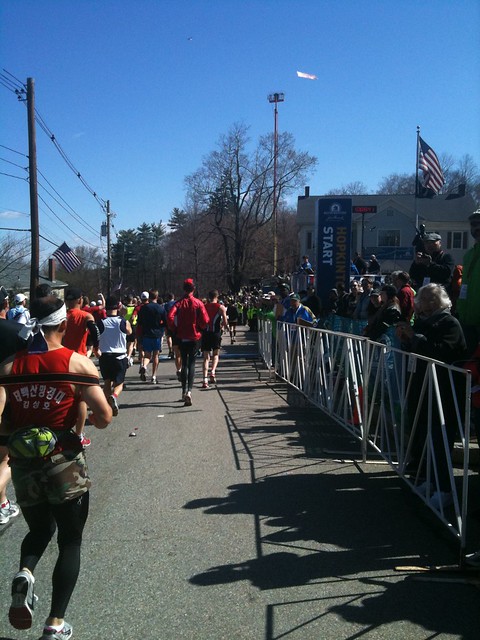
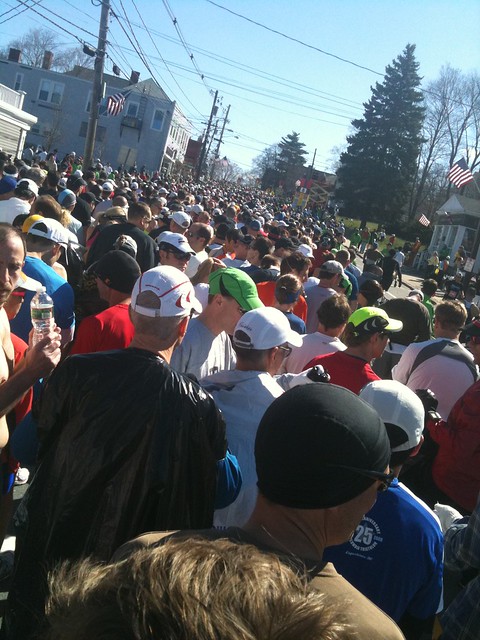
Right before the start line, I took my last few photos, then tucked away my iPhone, putting it on airplane mode. No, I wasn't going to fly, but I had no use of the signal. I would go radio silent. I lined up at the back of wave one, considering that if I had lined up with my corral, I'd be stuck in a group of runners gunning for faster times. Today wasn't the day for that. I figured that the back of wave one was probably the best place to be. Fast enough, but not in any one's way. It was, after all a training run.
My route to the start was not without some little blunders. I was still in the athlete's village at 9:15 a.m. waiting in an insufferably long lineup for a portapotty when I decided I should probably exit with the rest of the wave. I promptly found myself in the wrong buses and had to run to where we dropped off the bag. Oh well.
Later, I decided to get that last pee break before the marathon. The porta-johns right beside the start corral had big lineups and I realized that I was lining up behind a runner who had just done the London Marathon the day earlier, and landed in Boston at 10:30 p.m.! He also let us know that he had his bib pulled last year when he was peeing in the bushes.
I was really really excited waiting at the start. I had not run for a good three days but I was feeling good. I had gone through a lot of debate about what I should actually wear race day.
6 a.m.: T-shirt
8 a.m.: Hmm, maybe T-shirt with a singlet underneath
8:30 a.m. inside a porta-john: T-shirt, good to be cold
9:55 a.m. at the start: Maybe a singlet would have done.
The wind? Well, that's pretty much the underlining theme. If this marathon had a backbeat, or the background sound, it was that wind. You'd only hear it through the rustling trees, or the discarded Gatorade cups and went blowing ahead of you with every gust. It was a cold wind, but it was at our back. The perfect combo.
The start
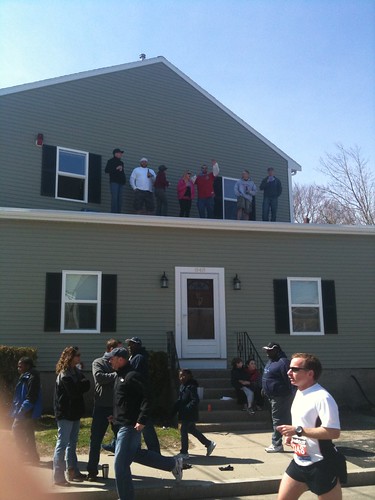
I went out at a reasonable pace, embracing the first downhills but not too pleased by the rollers. Oh well, I guess I was prepared for it. It was so much fun to be reacquainted with the number of people who would come out to watch the race. The crowd in Hopkinton was just unreal, really made it so joyful to run the marathon. Immediately, my I tuned into two possible issue areas. First, my right heel was a little tender, I'm not sure where it originated but I do remember babying it a bit without having it do anything major to my stride. Second, my freaking legs weren't that fresh. I felt a little tightness in my calves and legs. Three days without running and literally no warmup meant I was to spend these downhill miles 'warming up'. Not good.
5K split: 24:47
1. 7:48 (4:51)
2. 7:58 (4:57)
3. 8:03 (5:00)
In my mind, I wanted to go a bit faster than last year, maybe go for some sort of a paced run. By this point, I was keyed into runners around me and decided to go out at a very comfortable 8 minute mile pace. I could comfortable hold the pace but I was hoping my legs would shake out from the tightness earlier.
Although I was going easier than race pace, it really wasn't a pace where I could take a lot of pictures or tweet. I was also avoiding from doing too many high fives, though probably did trade high fives a dozen or so times (as opposed to dozens of times).
4. 8:01 (4:59)
5. 8:15 (5:08)
6. 7:55 (4:55)
Random picture I took (took very few)
10K: 49:47 (5K split in 25:00)
The day? Absolutely gorgeous. The previously cold weather was actually perfect. The wind was actually pushing us toward Boston, and at times, I could feel the wind at my back. Too easy, I thought. The pace was good, nothing to really write about, I just tried to divide my time between just keeping on proper pace, taking in the downhills and uphills, enjoying the crowds and the other runners.
Boston course is so great, rarely are you left to run on your own, which is actually a nice thing for pacing. The miles were pretty uneventful. My legs were feeling better. I was recognizing some of the same runners who were at my pace. a few people from the wave behind me were starting to catch up but not many. At around the 9 mile mark, I saw a porta-john and I decided that maybe my stomach was bothering me. So I ducked in for a washroom break. Never fun to do, and you do lose time, but sometimes it's well worth it. Mile 9 was about a minute a mile below the pace I was trying for.
7. 7:55 (4:55)
8. 8:05 (5:02)
9. 9:00 (5:36)
15K: 1:16:01(5K split in 26:14)
Doing a systems check, I got back into pace and started at it again. At this early point, I was already counting down the miles (10 down, 16 to go). Maybe that's not a good sign. By the time I hit the 15 kilometre mark about a minute behind 3:30 pace, I still thought I should aim for a 3:30. I knew I wasn't racing this (too late at this point) but I could at least not find excuses to slow down. This early in the marathon, I was concentrating on getting in the proper fuel mix: At least a sip or gulp of Gatorade at each stop and maybe some water. The plan was a gel about every 5 miles, which would mean I could down about 4 to 5 during the marathon. Good practice, I thought, especially since my last 30K I only brought one gel and forgot to take it. Doh.
I tried to remind myself what it feels like to run easy. I tried to remind myself that 8 minute kilometres is easy. By the time I had done the next 5K, I was back on 8 minute kilometre pace.
10. 8:07 (5:03)
11. 8:06 (5:02)
12. 7:48 (4:51)
20K: 1:41:03 (5K split in 25:02)
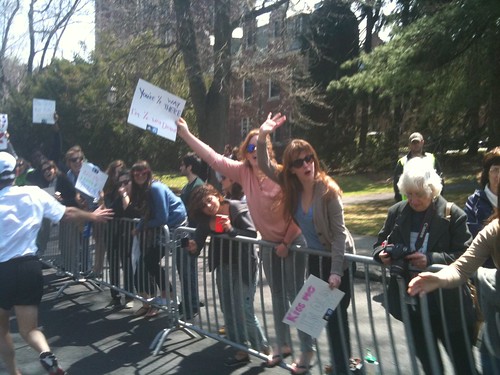
Seeing the word Wellesley brought back happy memories. About Ryan Hall egging on the crowd. About that Scream Tunnel. Last year, it was a blast. I decided to take some pictures so you guys can see what it's like. You enter into the campus area and you hear this distant cheer. Within metres, the volume escalates, then you see this:
And this little video.
Wow, eh? So that would make it my second stop for the marathon.
13. 8:00 (4:58)
Half: 1:46:25
So I had reached the half with a time that was a full 1:25 behind 3:30. Oh well, I had work to do. Exiting the college, you get a little bit of a high but you know they're coming, and you have no choice but to face them.
14. 7:48 (4:51)
By them, I'm talking about the words Newton and Hills. By them, I mean those four mothers of climbs. People talk about the final three hills which culminate in Heartbreak hill all the way in mile 21 (I forgot that it ends at 21, not 20.. yes). But the first one, that starts when you cross the river and following a massive plunge. I took the downward bit a little easier, using it to conserve some energy.
15. 7:57 (4:57) 25K: 2:05:35 (5K split in 24:32)
So the next 10K is basically the miles that can break many a runner. It was on that first rise, at mile 16, that I started seeing a lot of walkers, and when I started to really notice I was passing people. The first one is a long unrelenting hill over an exposed overpass. I don't remember much fan support. I took that mile in a crazy 7:42. Huh? I'd like to think my Garmin misfired but looking at the elevation gained, it looks real. Wow.
16. 7:42 (4:47)
The next five miles features three hills and also a turn in the course! The first two hills are moderate climbs, each followed by some downhill portions or flats. I found the trick was just like we take any hill. Change up your stride, use the same effort. I think I relished in taking the hills a tiny bit more aggressively. The great thing about the last three hills: fan support. Tonnes of it. I think it really helped us get through. I used markers in the distance as my targets and thank god for those Canadians who flew flags on the hills. They were really nice motivational signposts. When i'd get there, I'd point at them, point at my Canadian flag hat, and run on strong. Next two splits aren't bad, huh?
17. 8:09 (5:04)
18. 8:03 (5:00)
30K: 2:30:37 (5K split in 25:02)
So I had just done the first half of the Newton hills in exactly 8 minute 5K pace. Nice. I wasn't feeling too winded, almost too comfortable. Miles 19 - 21 includes a slight fall plus the last two hills. In this stretch, they had set up a big Jumbotron. There were tonnes of water stations and a gel station, and more fans. Seriously, that got me up the hill without thinking about bonking. As I was climbing Hearbreak, I was almost enjoying the mother. It hurt a little but I was not close to going over the edge.
19. 7:54 (4:55)
20. 7:57 (4:57)
21. 8:05 (5:01) (Heartbreak Hill!)
35K: 2:55:23 (5K split in 24:46)
Wow, I'm very happy with my two 5K splits in the Newton hills. They were pretty damned good. In retrospect, I think I turned the game on around mile 16. Before that point, before Newton, I was flirting with a sub 3:30 but just thinking training run. By the time I hit the hills, I knew I wanted to run them well.
Boston College is freaking awesome. It was so loud and rivals Wellesley. I was running near some guys wearing alumni (Badgers) that were getting massive cheers. They were two uberfit guys who looked like they were in their 40s just out for an easy strong run. They were hamming up the crowd and were running pretty strong. I was feeling just as energetic so I decided to match their pace. We were going downhill, the crowd was going crazy, they were heading into Boston. Why wouldn't I run faster.
So I ramped up the pace. Suddenly it wasn't 3:30 pace but a little faster. Great. Felt good. Didn't feel like I would blow my training at this point by ramping it up. In fact, what other confidence booster is there by finishing your marathon at your fastest. Those miles into Boston were great. A blur in bits. Part of it was just trying to negotiate the crowd of runners. Many were slowing down, some were walking and I was trying not to lose pace. I was really enjoying the crowd. I wanted to run Boston, almost race Boston. That, at least, was what I could give back to this course, some good pace that got me here in the first place.
When the race enters the Boston area, it goes a whole new level. It turns from this historical marathon route that's lined by local community into a Big City Marathon. Not that one is better than another but the fact you get both is pretty rocking.
Splits speak for themselves. This is the speed I remember.
22. 7:42 (4:47)
23. 7:37 (4:44)
24. 7:36 (4:43)
40K: 3:19:10 (5K split in 23:47)
Those three miles pretty much reeled back in that time I lost in the portapottty and then some. I was on track for the 3:30.
Now it's important to note that 1) I didn't run with my fuel belt 2) I did not have a pace band 3) I really didn't pay attention to my splits until I would hit a 5K split. So it's pretty hilarious that when I hit 40K, it was very simple math that led me to the conclusion that a sub 3:30 was a possibility. I remember last year waiting hopefully for the Citgo sign to come out so I could take a picture. This year, I couldn't wait for it to show so I can run right up to it and past it. I was thinking of the game I went to Fenway a few days earlier and how close it was to the finish. With the last two miles, I was basically counting it down by each 400 metres. Possibly because of the downhills, or maybe because of the faster pace, I was feeling mini cramps creeping. I continued to hydrate (I didn't take my fifth gel) and resolved to run off the cramps.
There was one hitch to my run fast to grab the sub 3:30. R. She had texted me and I checked the iPhone after Heartbreak and she told me she'd be across the street from the Hynes Convention centre, on the left. I knew that I had to spot her, and I love to stop and chat and give her a little kiss. It's my way of thanking her for standing there since 9:30! To do that, I would have to run faster.
25. 7:32 (4:41)
With the last mile, I was still near the uberfit guys so I stepped it up to give me a little buffer. Running under the bridge and then turning onto Hereford and left on Boylston was just as amazing as ever. I stayed on the left side and tried to keep pace while scanning the crowd. I saw R. in the distance waving and ran over to her. Said hi, gave her a kiss, took a picture, then asked her to take a picture of me. This might have taken 15 seconds but she and the people with her were telling me to go! I said 'gotta run!' and 'meet you at the hotel!' and soaked in the final stretch.
Proof I stopped.
26. 7:25 (4:37)
The rest: 2:46 or 4:30 km/pace.
What a great feeling it was to run Boston consistent, strong, and with a great finish. All through the marathon, I was trying to save the memories for the years I won't run Boston, to try to run Boston so I can get familiar with it, and to really savour its course. It's one of a kind.
Final time: 3:29:25
So, what's the deal with Boston, you're asking
You know, we all know we have an obsession of getting to Boston. Even those who may not admit it, we do. I think we really try to BQ because it is hard and it is there. Does it separate good runners from great runners? Does BQing when you're young more of an achievement than when time gives you more literal time? Do we really understand what it's all about when we say I want to do Boston? I first set my sights on Boston because it was that holy grail. The qualification stood for personal excellence and it was an important milestone to reach. By reaching the time, you reached Boston. Or not really.
Once you get your BQ, you get something that probably goes unsaid by those who have done it before. It's something that's hard to capture even in all the pictures I've collected over the past two years. To those of us who run it year after year, I think I know why you come back. It is a special race, putting aside exclusivity or elitism. The course is technical and it takes a lot of training and heart and tactics to run it well. But it is not just the course. It's the weekend, the 'Marathon Monday' when this event becomes one that's owned by all those communities between Hopkinton and Boston.
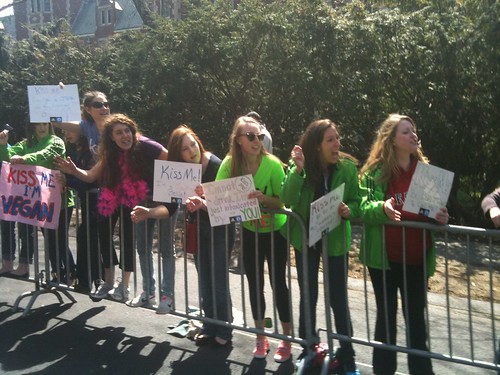
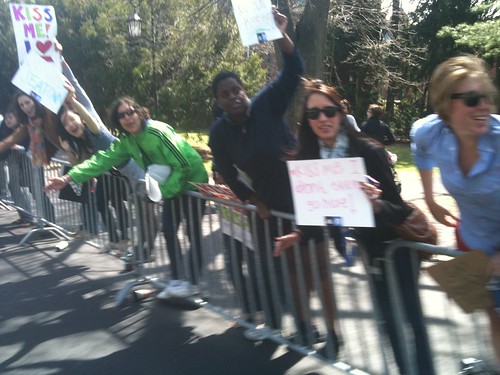
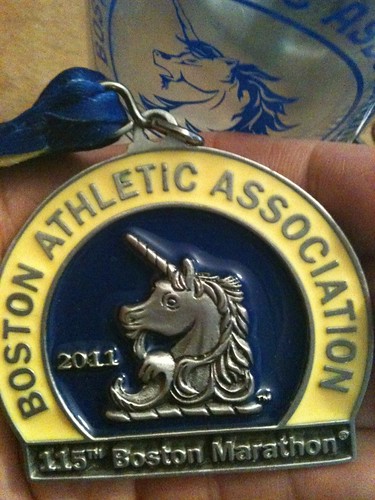
A mere hour or so after the marathon, I walked into North End for a decadent lobster roll and with the simple medal draped around my neck. I don't often keep them on after most races, but I have for Boston, even for one night. In the space of two hours, a half a dozen people stopped me to congratulate me and ask me about the race. They, Boston citizens, were genuinely happy for me, in a little awe of the event.
Because it's not just ours, us runners, it's a Boston thing. In a little way, we're allowed to take centre stage in a spectacle that has gone on for 115 years. No matter who shows up to be picked up by those school buses next April or the next 30 Aprils, it'll still be 'Boston'. We'll all come, from different states and countries, for the privilege to be part of that spectacle. BQing gets you a chance to be part of something greater than the 26.2.
Split recap 5K: 24:47
10K: 49:47 (5K split in 25:00)
15K: 1:16:01(5K split in 26:14)
20K: 1:41:03 (5K split in 25:02)
Half: 1:46:25
25K: 2:05:35 (5K split in 24:32)
30K: 2:30:37 (5K split in 25:02)
35K: 2:55:23 (5K split in 24:46)
40K: 3:19:10 (5K split in 23:47)
42.2K 3:29:25 (2.2K in 10:15 or a 23:17 5K split)
At the end of every run, I reset the watch. The clock, pace and distance counters of my Garmin wipe out the previous effort that left me soaking, displaying neat, clean zeros.
The sobering reality of the new year, when the January darkness rules my free time, hits hard on a runner's psyche. From this point, I slowly take a body that has run multiple marathons, hundreds upon hundreds of hours, and try to coax it back to life.
A 5K jaunt may be agonizing -- almost like I haven't run almost 2,000 times in the past eight years -- lies, body says, lies. As I take a breather, somewhere miles away from my condo's front steps, stretching those aching calves that could use a little extra bending, it seems like I've just started all over again.
***
Why did I come so far, only to feel like I haven't gone anywhere?
The body rests, and your muscles begin the long slide to a state where they can start thinking about what atrophy must feel like. The resting heart beats a little faster, not having felt the pain of sucking in oxygen only possible with hard effort (or sub-8 minute miles). The legs, used to striding across sidewalks and pavement in what movement can only be imagined as graceful -- Kenyan like -- can only bear to be fluid for no more than a few hundred metres, clomping down on pavement like rusted hooves. And it feels just as heavy.
Running? This isn't what my mind's eye imagined.
Fact: I've pounded out more than 13,000 miles in the past eight years; I've run 22 marathons; I've tracked my usual downtown routes hundreds of times. Also, fact: Yesterday's run of 10 miles was a silent struggle.
Yet.. Yet, when I get past the pain, when I make it to the ninth kilometre, something clicks in, I remember why. Sort of like listening to that song that's been repeated on your iPod -- only once in a while do you zero into the lyrics, when the words and harmony connect with your attention that you truely understand why you loved that song in the first place.
It's the same with running. I suppose in those early days of a marathon training, a month from when I'd start thinking of hitting the roads for the length of three podcasts, I rediscover what it is about running that grabbed me.
***
I was reading about Canadian runner Cam Levins. He surprised the running world by snagging a breakthrough of the year award. How? By outworking everyone -- 150 to 190 miles a week.
Just finished up running 190 miles this week! New record! #timetosleep
“Last year showed me that as long as you don't set limits on how hard you can train, then the same can be said for races. I have continued to improve each year because there was never any doubt in my mind that I wouldn't as long as I put in the work to deserve it.” - from Flotrack
Hours and miles were reaffirmed mid-run one night while I was pounding out the last stretch of a six-mile run, listening to Macklemore & Ryan Lewis's The Heist. A few words from Ten Thousand Hours -- the theory that with hours put in, you gain brilliance -- resonated as I strode down the hill, letting gravity assist in my hard work.
Put those hours in and look at what you get
Nothing that you can hold, but everything that it is
Put those hours in and look at what you get
Nothing that you can hold, but everything that it is
***
That's it. With each run, I'm rebuilding my cardio and those muscles that feel most comfortable when bent at a 45 degree angle, best seen in that zone between jog and sprint. I'm geting used to the pain, getting used to getting stronger, rebuilding and shoring up blood vessels and connections that will deliver more oxygen and blood cells to my engines, so I can run longer, faster, stronger. I've always wondered, since switching to long-distance running, why I often can almost conjure bouts of runner's high. Often after six or seven miles, my body hits a pace unfathomable on any other day, but it feels like i'm just putting my body through its paces. I zone out, tune into my form and distance disappears, as does time.
Nothing that you can hold, indeed. It's so easy to lose hold of that, what it is to be a runner, but it's entirely possible to find your way back to running mojo -- you just have to find it for the first time. It then it just takes plenty of miles. And time.
Nine days ago, a day after I got back from Boston, my quads still stinging, my hamstrings sore and my spirit undiminished, I sent my coach Rejean an email with the subject line: "Update and an audacious plan?"
A few days later, my friend Lee, sent me an email titled "My latest crazy idea."
The night after the Boston Marathon, Lee and I commiserated about the day that was not ours. It was too hot, too sunny and just not ideal after a winter of training. Lee was thinking that he'd love to make it back to Boston next year. I was lamenting a strong season of training that resulted in only two races. Over three dollar drafts of PBR, we drowned our sorrows, quietly hatching plans.
I suppose there's something in the water in Boston.
***
Goodlife was 13 days after Boston. And as I saw the forecast shape up, it looked like an ideal forecast. Cool. Like good cool. So I asked Rejean whether he thought I should go for it. I reasoned my Boston, run in 3:23, didn't see me entirely empty the tank. Running 42.2K 13 days out isn't common, but it can be done. We worked on a workout plan to see how my legs were bouncing back.
So over the past week, I threw in a medium run, a few quicker workouts. I was tired, I was sore, but I knew I was still fit. My goal, I presented to Rejean, was to get to 3:10 or faster, which I thought was well within my aerobic capability. And also a good shot at a BQ, which for my age is 3:15. Rej hatched a sensible plan and Lee was on board to run with me as long as we could.
By the time I was making my way to the race start, only five people knew I was racing.
Codenamed Project Audacity.
***
1K-5K
Of course, this seems to be the year where weather throws some challenges at you. It was a light rain, lots of wind and it was cool. Lee and I started together and just ran by feel, mainly. The course takes a north turn where we were able to get a sense of the wind (North East) but we were able to plunge down Yonge Street. We've both run Goodlife on numerous times so we knew what to expect. A big downhill before Hogg's Hollow. We did that split in 4:30 km.
Splits: (4:22, 4:29, 4:28, 4:11, 4:30)
5K-12K
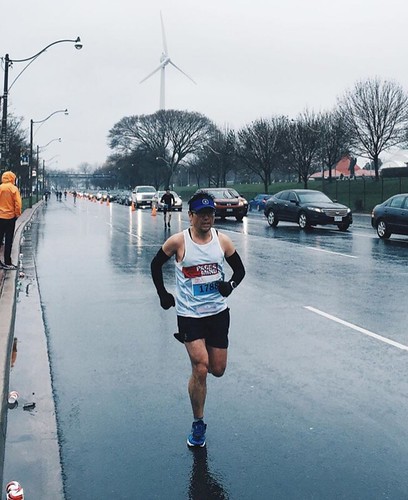
I took a kilometre or two to settle down from Hogg's and I was paying close attention to how my body was responding. To me, the effort felt slightly harder than it should -- i'll take it as fatigue following Boston but when I compare it to my course feel at Boston, this run was way better. I was wearing a double singlet, a visor, arm warmers, gloves and shorts. All were great ideas. I felt I was cool enough, but not risking of hypothermic. I wouldn't sweat too much which would have been my major worry. As well, the stride I was running felt efficient. I was taking careful notice of my left calf which was what seized at Boston and hoped that taking in Gatorade and gels would delay any issues.
The course has a bunch of rollers, then turns around Davisville where you wind your way around UCC. We felt the tailwind for the first time and it was glorious, so we kind of let the feel dictate the pace. By the time we hit 14K I knew we were banking big time with the faster downhill splits.
The Casa Loma to the bottom of Rosedale Valley is what makes Goodlife a fast marathon. You can run it and bank time but also save your cardio. We hammered it where we could but while running down Rosedale Valley Road you could feel the headwind running east. It was noticable, even with the trees as cover.
We ran down Bayview extension and the pace still felt good. Saw my teammate Bart who took this picture and we just kept on chugging.
Lee and I hauling ass.
We hit the half mark at 1:33:22, which was a 3:06:44 pace. We both kinda knew that we'd probably be giving up some of that time so I told Lee I would regulate the pace a bit.
22K - 35K
This section is what I call the 'home course' all the way from Corktown past to Humber Bridge, along the MGT. This year, we had a nice tail wind, sometimes a crosswind, and if we had buildings ahead the wind would bounce off and push us. In all, I was able to bank effort while using the aid to save some energy. As I was hitting the 24K mark, I felt that today, barring wind, I would be able to power through the 30-35K mark with strength.
We entered Ontario Place and out on the trail and Lee then went ahead. I decided not to give chase. In retrospect, maybe I should have taken advantage of the wind and done a stronger run up to 35K but I just was content zeroing in on runners around me. My gloves were soaked, my glasses were fogging up and covered with droplets but at least I was cool. Today I felt I would go for it.
The 3:10 pacer caught me at 35K tearing around me with a big group. I thought they were going fast so I didn't give chase but I wish I had -- they would have been a good wind block in future miles.
So as we turned back, we were hit with a wall of wind. I can't even describe it but it felt you had a parachute attached to you. I run on the waterfront often and this I would call an exceptionally windy day. I felt my pace suddenly drop. Breathing was hard. And lo and behold, the left calf was strarting to show signs of cramping.
Once we got past a particularly windy section and hit the bridge the wind wasn't as bad -- though horrible, and I forced myself to pick up the pace.
Each kilometre became a negotiation. I was frustrated that my effort was not turning into turnover and speed. I fought impulses to slow down to walk. As each kilometre came (38, 39) I was looking at my watch thinking of all the banked time that was now coming back to me. I knew that if I hit the 40K mark in 3:00 that I could probably hit the 3:10 target.
If only two kilometres could be so easy.
I asked myself if I could run two kilometres. I thought about the marathon and how I committed myself not to run one this fall. This was it. This was my chance to put it in. Taking walk breaks would slow me down, but just keeping my movement on would push me closer to the end. I found a second wind in the final two. It was hard, I won't lie. Running two marathons at effort in two weeks is something I haven't done in awhile. But I saw friends, the crowd and realized that if I just pushed for a few minutes, it would be a difference between hitting 3:10 and a 3:13. It would be the difference of qualifying for Boston with 1 minute of buffer and a lot more than that.
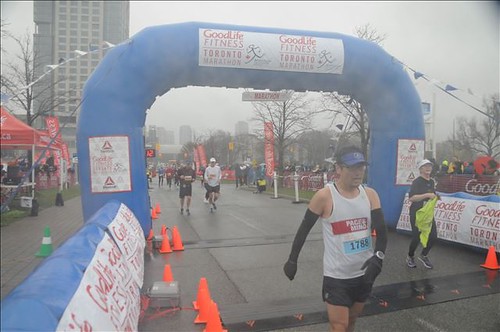
So I pushed. And hit the final corner with a great crowd cheering.
The final stretch. Photo: NightTerrors
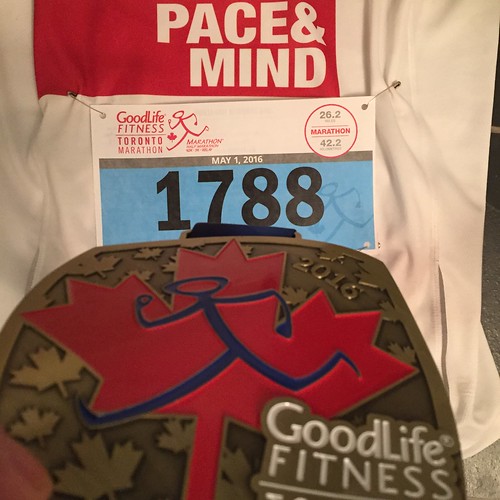
I looked down at my watch and laughed. 3:11:00 by my hand. 3:10:59 chip. A 4:01 under my Boston Qualifying time.
I quickly caught Lee at the end. He hit 3:10:15, and also a big BQ for him as well.
I've run faster and I've closed races much stronger, but of my 33 marathons, this was one I'm proud to have run. Would I suggest runners try a 'revenge' or 'redemption' race so close to after the one they went wrong. It's probably not for everyone. And it's probably why I've been keeping this under wraps.
But for sheer audaciousness? Absolutely, sometimes, it has to be done.
About 200 metres into yet another race, a noise drowned out all others, and I knew I'd be in for a transformational experience. Up until the 7:30 a.m. starting time of today's 25K, it was really not that different from the 97 previous times I'd been at road races -- at 5Ks, half marathons and 27 marathons. All of them were done on roads -- at major cities with thousands of others, or in a city park with a few hundred.
But none of those were like the 98th. None of them were like today. And I'm left thinking why it took so long.
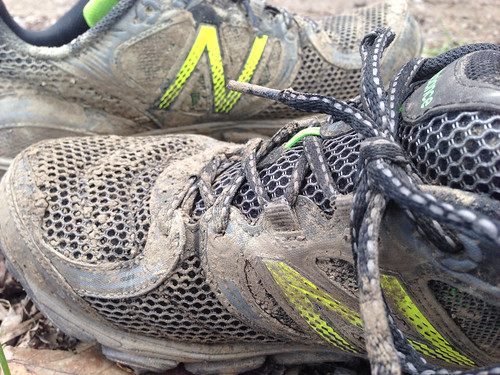
Today, I had abandoned my Asics road shoes for New Balance trails. Today, I had no idea what a good pace would look like, much like the first race 97 start lines ago. Today, under the canopy of trees on a much-delayed Spring, I could hear the difference -- the thud of our trail shoes on pine needles and later sucking mud, and then then sound of birds.
New shoes now broken in.
The sound of birds chirping overtook the footfalls of a few hundred runners. As I was letting gravity help plunge me deeper into the trails before I'd have to climb the coming hills, I knew I was already falling in love.
This won't read like any traditional race report. I really don't know how to write it for trails, maybe one day I will. I will refer you to Russell's excellent course preview of the Sulphur Springs race.
The race is made up of varied distances, a 10K, 25K, 50K, 50 miler, 100 miler and a 100 mile relay. So from the 10K (done the fastest in 34 blistering minutes) to the 100 miler, which will take some as much as 30 hours, there are hundreds of runners doing this course in Ancaster, Ontario, just outside of Hamilton. (Results for 10K, 25K, 50K, 50 Mile, 100 Mile Relay)
Why do races matter? It's clear that we're passionate about them in Toronto, and that runners deserve better than we've seen delivered of late: The finish-line fiasco at the Sporting Life 10K a week ago and water issues a week prior brought that to light.
I've been outspoken about bad races because as a runner, I felt the need to express what many of us were thinking but not many are saying in a more public manner. We often see organizers or running press gloss over fine details -- they focus on the elite, record setting numbers and sometimes forget that it's the many thousands of us who run and pay for the promise of a good road race. We are, at times, the after thought.
For me, races are one of those carrots that take me through my annual training rites, giving purpose to the miles aside from the pleasure I get from running (and believe me, I get plenty). It's a 30K race that has me slog through January snowstorms, a May marathon that has me giving away sleep on Sundays. Races provide opportunities for me -- like other solo runners -- to gather with my broader community from time to time, see old friends and meet new ones. There are exceptional races, both big and small, and they are the community 'gathering place' of our running world.
What do other runners think? Am I alone? No, as it turns out.
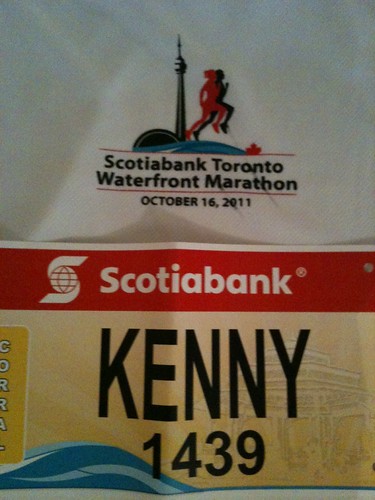
My last warmup runs a few days before Toronto Marathon left me feeling slightly confident. The soreness after Chicago was going away. My legs, which a week ago cramped up in the heat, felt a little sore, but I was more occupied by the wind. It was blowing strong, in an easterly direction. Not a pretty one given the out-and-back nature of the course.
My pre race movie was Running the Sahara and it gave me some perspective. In it, the three runners do an average of two marathons a day for 100. Perspective like this, and memory of feats like those of Dean Karnazes or Terry Fox made my back to back seem almost easy.
Easy to run, sure. To race was another thing, which is why I was shaking my head when I lined up behind the 3:30 pacers with a 3:40 band on my wrist. My legs were recovered but I wasn't feeling fresh. Yes, it felt like I'd just run a marathon a week before.
I started off trying to run easy. Almost immediately, started to baby my right heel, which is in far better shape it had been a month or so earlier, but still on the mend. Enough of a tingling to tell me to run easy. No worries, because my legs were in no move to go fast.
But being part of a stream of runners, you tend to just go with the flow. During this point, a friend of mine, Peter, gained on me and we chatted for a few minutes before I told him to go ahead. My mantra of any marathon is that the first half should feel effortless.
1 5:14.7
2 5:08.4
3 5:06.2
4 5:03.7
5 5:10.3
We were running on to the highway and past the SkyDome, and I had the first of several pangs of worry that I should not or could not keep up this pace. But I just tried to put away the thoughts as we were running into the wind. Focused on running behind runners, drafting off of them. A few kilometres later, I took my first gel and started to go on the lookout for the leaders on their way back. Amazingly, Reid was running with the lead pack and we all cheered out. Later on, saw my buddy Lee, who ended up with a rocking 1:21 half.
6 5:00.5
7 5:08.4
8 5:08.8
9 5:10.8
10 5:05.1
It was a few more kilometres until the turnaround when the wind would be at our backs. Around this point, the 3:35s came by and passed me, which struck me as fast, so I decided to let them go and made the mental note not to have the 3:40s come behind me. Not yet anyways. The wind pushing us back felt great, and I was pulling in pretty good splits, at or around the speeds I was running last week in Chicago. At this point, I noted that the crowds were extra great this year at some of the cheering sections. Very good omen for the rest of course.
11 4:57.2
12 5:05.2
13 5:04.5
14 5:06.0
15 5:04.5
By this time, I decided to take out my headphones. LETS MARK THIS MOMENT, SHALL WE? The first time ever in a road race I have put on headphones. I knew that the last half of the marathon would be a little lonely, or so I thought, so I busted them out and put on my marathon playlist that I quickly put together the morning of. It only had 16 songs (too lazy to hunt for others in my Nano). I was noticing that a lot of the half marathoners were running out of steam, so I just kept up the pace and enjoyed the tailwind. Started to pass runners.
As we neared the point where the half and fulls split, I was feeling a lot better. And as we turned into a smaller crowd, I suddenly realized I was running very close to the 3:35 pacer group. So I joined and with my pace taken care of for my by the group, I just started to pound out the miles with this group. Was happy to have that distraction.
16 5:05.7
17 4:59.3
18 5:00.1
19 4:57.3
20 5:07.0
We run right in front of my condo, and I had a split second of putting it in for the day (it was an actual thought, but not serious) and noted that I had a freaking long way to go. I thought about the fresh looking fellow runners and how they'd had no idea one of them just ran a marathon a week ago. I worried slightly about what would happen if I should run out of steam and suddenly stopped. Then I just kept on going.
21 5:01.1
HALF: 1:47:48 (On pace for 3:35:36)
We had the first of three out and backs, and I started looking out for other runners that I knew. I saw the 3:30s and Marlene running a little bit behind. I thought about her going for 3:30 and was very proud as I pointed at her and we waved. I saw Sam a little behind that and hoped we didn't catch up to her.
I was impressed that there seemed to be a good showing of runners (in all, more than 3,500 did the marathon) and it showed a little later when a woman tripped and fell and we almost ran over her, it was that tight. Meanwhile, the pace bunny was doing his job and we kept up the pace. I didn't feel hard, but I tried to shut off that it was only barely past the half.
22 5:04.4
23 5:08.3
24 5:03.4
25 5:04.9
My next job was to make it to the 'wall', down Leslie and up again. The pacer had a friend who joined him (someone who looked fresh) and they chatted away. I'll have to admit, it was a little annoying to have random chatter from this 'hey, i'm running only 10k with this group' runner while our pacer got distracted. We were starting to make ground on other runners who had either slowed.
I've run enough marathons now to know to expect the march zone, when you start to encounter runners who start to walk. When you're with a pace group or if you're running at a good clip solo, it's invigorating to run past them at the same time that it is a little difficult to start weaving through the crowd. If you're on the receiving end, it's even more devastating. I do not like reaching this point no earlier than kilometre 35.
26 4:59.7
27 5:02.0
28 4:59.0
29 5:02.2
30 4:58.4
A final push to the most easterly portion of the course at the Beach. I had not run Scotia full since it added this portion, and I was really impressed by the crowd support. It was pretty amazing for a Toronto race. As we were running it, we encountered some rollers, not tough, but enough to remind me that I was indeed embarking on another marathon. If a taper period gives you that added spurt of energy to run hard the last 10K, then I was discovering this now.
31 5:00.6
32 5:02.8
33 5:05.9
34 5:08.8
35 5:04.6
We were on our way back. The pace group was running strong, but we were also running into that wind. I told myself to keep up the pace as much as possible...
36 5:02.5
37 5:08.6
Until one moment, I just stopped into a walk. It was somewhere into the 38th kilometre, and I felt just spent. No cramps, just a little bit of an exhaustion combined with no will to fight the end of the course. I began to take walk breaks until I felt okay enough to break into a ruin. When I hit this point at some marathons, I don't turn into a jog as that would turn into too painful of a long stretch, plus it doesn't feel natural to go that slow. So I would walk for a bit, then run at some sort of pace, the break again. This continued for a bit before we hit the bridge over Don Valley Parkway.
38 5:20.1
39 5:53.5
40 6:15.3
I spotted my buddy Sam in the distance, and I knew that by catching her, I probably caught her on a tough day. We were both going at slow speeds, and I finally caught up to her about 2 kilometres from the finish.
Me: Vague wave with a 'hey'
Sam: Hey Kenny
Me: Tough day, huh?
Sam: That's the marathon..
We ran for a little bit, and a chipper friend of hers came and said something along the lines of 'lets run!' Don't say that, people, to clearly suffering runners. Just stay silent, and run with them at their speed.
I soon got separated at a water stop, and not wanting to lose momentum, I started to run again. The crowds at the last bit helped me get my pace back up, especially since I knew I was less than two miles from the end.
41 5:52.9
The final kilometre felt like it went by in slow motion. Of course, I was not running at marathon pace, but my watch checks surprisingly said to me that I had plenty of time banked under 3:40. A final few turns, and I found myself running toward the finish. I won't lie, it felt great to see the finish line.
Truth is, I very rarely get the 'emotional' reaction to the finish line. I just had the hunger of knowing that the end was almost near.
You've read about the bag-check fiasco that almost led me to forget this race.
A very decent result, faster than Chicago and my legs were put in a good place that I can probably end my October marathon month with a decent MCM.
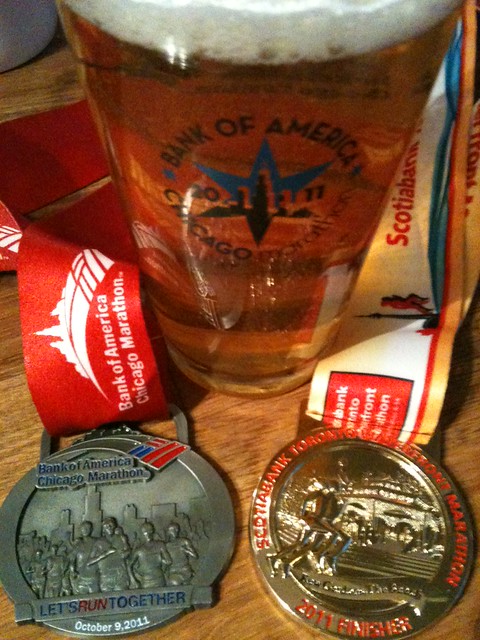
Also worth noting that today, Oct. 22, is the fifth anniversary of my first marathon. Five years and 17 marathons later.. Two down in October, one to go:







 from
from  from
from  from
from